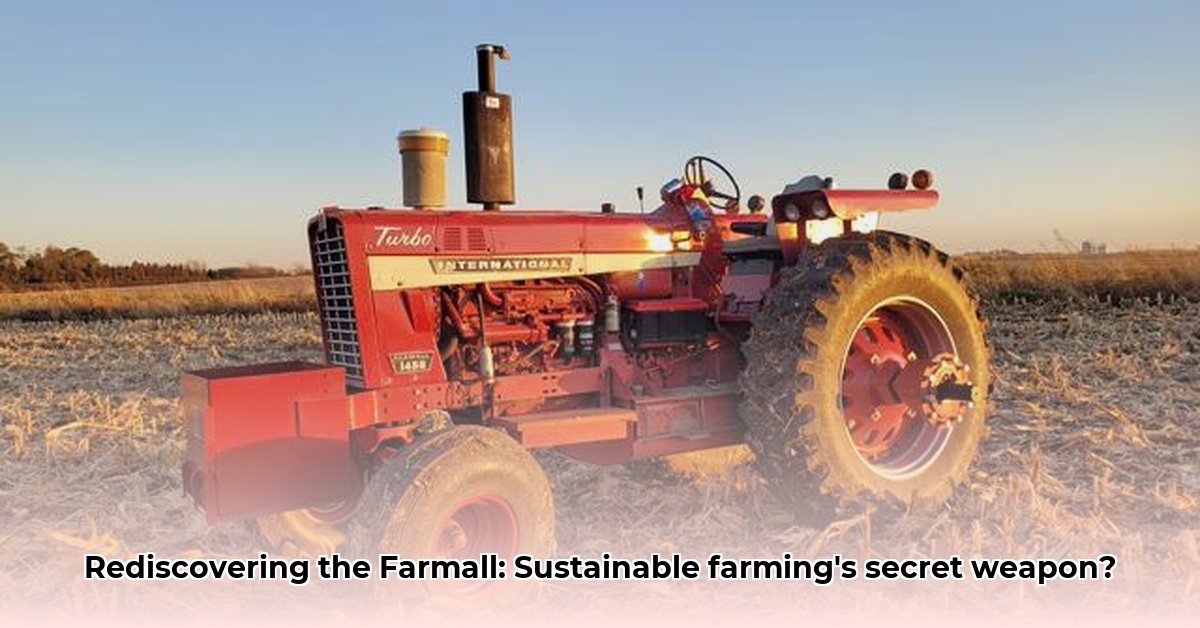
A Legacy of Innovation: The Farmall's Rise and Resurgence
The International Harvester Farmall tractor, a name synonymous with agricultural mechanization, is experiencing a remarkable resurgence. For decades, these workhorses revolutionized farming, transitioning operations from horse-drawn implements to efficient, mechanized processes. Their impact was profound, boosting output and transforming farming practices across America and beyond. But their story doesn't end there. Today, the Farmall is finding new relevance as a key player in the sustainable agriculture movement. For more information on new Farmalls, check out this helpful resource.
The Farmall and Sustainable Agriculture: A Perfect Pairing
Why the renewed interest in these vintage tractors? The answer lies in their unique suitability for sustainable farming practices. Their lower horsepower, compared to modern behemoths, translates to reduced fuel consumption and decreased greenhouse gas emissions. This aligns perfectly with the environmental goals of sustainable agriculture. Furthermore, their lighter weight minimizes soil compaction, a critical factor in maintaining soil health and fertility – a cornerstone of sustainable farming. Isn't it interesting how a tractor designed decades ago fits so well with contemporary farming ideals?
Acquiring and Maintaining Your Farmall: A Practical Guide
Ready to bring a Farmall into your sustainable farming operation? Here’s how:
1. Finding Your Farmall:
- Start your search online (eBay, Craigslist, and specialized agricultural equipment sites are great resources).
- Attend local farm auctions. These can be treasure troves of hidden gems.
- Network with other farmers and collectors. Word-of-mouth is often the best way to find exceptional deals.
2. Pre-Purchase Inspection: A Necessary Step
A thorough inspection is crucial. Check for:
- Rust: A common issue with older equipment, indicating potential structural weaknesses.
- Mechanical Issues: Inspect all moving parts for damage or wear.
- Fluid Leaks: Any leaks (oil, coolant, hydraulic fluid) suggest potential problems requiring repairs.
- Functionality Tests: Run the engine, transmission, and hydraulics. Ensure they operate smoothly.
- Professional Assessment: Consider hiring a qualified mechanic for a comprehensive inspection (especially if you lack experience with older tractors). This can save you significant costs down the line.
3. Restoring Your Farmall: A Rewarding (But Potentially Costly) Project
Restoring a Farmall can be a labor of love, but it requires careful planning and budgeting.
- Parts Sourcing: Locating parts for older tractors may require searching online forums, contacting specialized parts suppliers, or even fabricating some components.
- Repair Expertise: You'll need mechanical skills or access to qualified professionals.
- Budgeting: Restoration costs can vary dramatically, depending on the tractor's condition and the extent of the work needed. Create a detailed budget before beginning the process.
4. Integrating Your Farmall into a Sustainable Farm System:
- Task Matching: Farmalls excel at row-crop cultivation, reducing the need for herbicides. They're versatile, handling plowing, planting, cultivating, and haulage.
- Capacity Awareness: Recognize their limitations. They may not be suitable for every task, especially those requiring heavy lifting or high speeds.
Challenges and Limitations: A Realistic Perspective
While Farmalls offer numerous advantages, it's important to acknowledge their limitations:
- Maintenance: Expect increased maintenance compared to modern tractors. Regular inspections and proactive repairs are essential.
- Parts Availability: Sourcing parts can be challenging, especially for less common models.
- Safety and Emissions Regulations: Older models might not comply with current safety and emission standards. Check local regulations before using your Farmall.
The Farmall's Continued Relevance in Modern Sustainable Farming
The enduring appeal of Farmall tractors in sustainable agriculture underscores a significant shift towards environmentally conscious farming. Their simplicity, reliability, and lower environmental impact make them a valuable asset for farmers prioritizing sustainability. This resurgence highlights the growing recognition that effective farming doesn't always require cutting-edge technology. Sometimes, proven solutions from the past offer the most impactful and sustainable options for the future.
Resources
- [Link to a reputable website for finding used Farmall tractors]
- [Link to a Farmall parts supplier or community forum]
- [Link to a resource on sustainable agricultural practices]
- [Link to relevant government or non-profit organizations supporting sustainable agriculture]